Some rooms change a founder's direction because the people in them reset what the founder believes is normal, possible, and worth doing. Conner Krizancic, founder and CEO of SpeakrBrand, walked into his first speaker training event in December 2021 "a bit lost," with "some direction, no real plan," and walked out with more energy and direction than he had felt in years. Five years later, that room still shapes the work SpeakrBrand does.
This is a short weekend story about that room and the rooms that followed. It is also a practical look at Proximity, the fourth P in SpeakrBrand's 5P Playbook (Positioning, Presence, Proof, Proximity, Promotion), and how founders who speak can choose and use the rooms that move them forward.
TLDR
- In December 2021, Conner Krizancic attended his first speaker training event in Detroit and left with a direction he had not felt since playing sports.
- The room mattered because of who was in it: people wired to make an impact on their communities and industries.
- Research backs the pattern. Half of CEOs report loneliness in the role, and peers and weak ties shape decisions, ideas, and opportunities.
- In the 5P Playbook, Proximity is the Power Circle: warm network, masterminds, speaker organizations, bureau relationships, and peer collaboration.
- Use the five steps in FIG.26A to choose a room, absorb it, give to it, return to it, and turn it into a story that earns trust before hello.
What Happened in the Room That Changed Conner Krizancic's Direction?
Conner Krizancic attended his first speaker training event in Detroit in December 2021, hosted by ImpactEleven, which was then called 3 Ring Circus, and the people in that room gave him a direction he had been missing. He was not on stage. He was not creating content. He was, in his words, "standing around absorbing everything."
What shifted was the company. "Everyone there was wired the same way," Conner wrote on LinkedIn. "They wanted to make an impact, and they were fired up about it." They were trying to change their communities and their industries and do something bigger than themselves. Conner had not felt that since he played sports, a part of his life that ended with a career-ending injury, a story told in why a career-ending concussion led to a life in speaker branding.
That first night, he remembers pacing around his hotel room "like the Energizer bunny, filled with ideas." He has written about the same event in a LinkedIn reflection on SpeakrBrand's first in-person event, describing how he "walked out of that event with energy and drive that felt almost unreal."
"Some rooms change your trajectory. And you usually don't know it until later." Conner Krizancic, on LinkedIn
The work that followed still looks like that room. SpeakrBrand serves speakers, authors, founders, coaches, and executives: different industries and stages with the same underlying drive. Conner has said the part he is most grateful for is the people the business puts him around.
Why Do the Right Rooms Matter So Much for Founders?
The right rooms matter for founders because founders make high-stakes decisions with few true peers, and the people around them shape what they notice, what they attempt, and which ideas survive. A room full of people who are building something gives a founder honest feedback, new questions, and a working model of what is possible.
Isolation is the default without those rooms. In Harvard Business Review, Thomas J. Saporito reported in 2012 that half of CEOs experience loneliness in their role, and 61% of that group believe it hinders their performance. Conner said the same thing in plain language when he moved to Dallas and joined EO Dallas: "Entrepreneurship can be a lonely, misunderstood road."
"Being in rooms with like-minded people who are generous, curious, and genuinely want to help each other grow? You can't beat that." Conner Krizancic, on joining EO Dallas
Peer rooms also improve judgment. Josh Lerner and Ulrike Malmendier studied Harvard Business School students who were assigned to class sections, and found in their NBER paper on entrepreneurial peers that more classmates with startup experience led to fewer unsuccessful ventures, a result the authors read as peers helping each other judge the merits of business plans. The Entrepreneurs' Organization builds its EO Forum peer groups on the same idea: six to ten entrepreneurs who meet monthly to share real experiences, not advice.
The people a founder meets once can matter as much as the people a founder sees every week. A five-year set of experiments on LinkedIn with about 20 million users, reported by MIT News in 2022, found that weaker ties led to more job mobility than strong ties, across 600,000 new jobs. The researchers explained in Harvard Business Review that arm's-length acquaintances were more helpful for new opportunities than close friends and coworkers. Rooms are where a founder collects those acquaintances.
The long view points the same way. The Harvard Study of Adult Development, summarized by the Harvard Gazette in 2017, found that people who were most satisfied in their relationships at age 50 were the healthiest at age 80.
Where Does Proximity Fit in the 5P Playbook?
Proximity is the fourth P in SpeakrBrand's 5P Playbook, and it covers the Power Circle: the warm network, masterminds, speaker organizations, bureau relationships, and peer collaboration around a speaker or founder. Proximity is often the P that quietly feeds the other four.
The 5P Playbook works as a diagnostic, a cycle rather than a one-time sequence. Positioning is the promise you are known for. Presence is where you show up. Proof is the credibility layer. Proximity is who you are around. Promotion is active outreach, warm network first. A founder with clear Positioning and strong Proof can still stall when the Power Circle is thin, because the warm introductions that make Promotion work never arrive. The reverse also happens: a founder meets the right people and sends them to a brand that is not ready. SpeakrBrand's Speaker Brand Builder program builds the messaging, brand identity, website, and sales assets so the introductions a room creates land on a brand that is ready to be booked.
Conner's own path shows how one room feeds another. The table below maps four rooms from his public posts to the P each one fed most.
| Type of room | Conner's example | What it changed | 5P it fed most |
|---|---|---|---|
| A learning room | A speaker training event in Detroit (ImpactEleven, then called 3 Ring Circus), December 2021 | Energy and direction, and a clear picture of the people he wanted to serve | Positioning |
| A room you host | The first LevelUp Speaking, powered by SpeakrBrand, December 2025 | Moved from attendee to host; attendees set up monthly calls to keep supporting each other | Promotion |
| A peer room | EO Dallas, after the move to Dallas in January 2026 | Relationships with Dallas founders and a renewed sense of energy and clarity | Proximity |
| A recognition room | A few days with fellow Inc. 5000 honorees, 2026 | The ranking landed through the people in the room, more than the number on the page | Proof |
Source: Conner Krizancic's LinkedIn posts, 2025 to 2026. On a phone, swipe the table sideways to see every column.
The recognition room is worth a note. After SpeakrBrand ranked #783 on the 2026 Inc. 5000, Conner wrote that "the number on a page never really landed" for him, and that being in a room for a few days with the leaders who earned their spot on the same list did. Proof carries more weight when it comes with people attached.
In-person time also carries weight that a message cannot. In a study summarized in Harvard Business Review in 2017, Vanessa Bohns found that a face-to-face request was 34 times more successful than an email. For a founder who speaks, the room is where the warm network starts.
How Can Founders Find and Use Rooms That Change Their Direction?
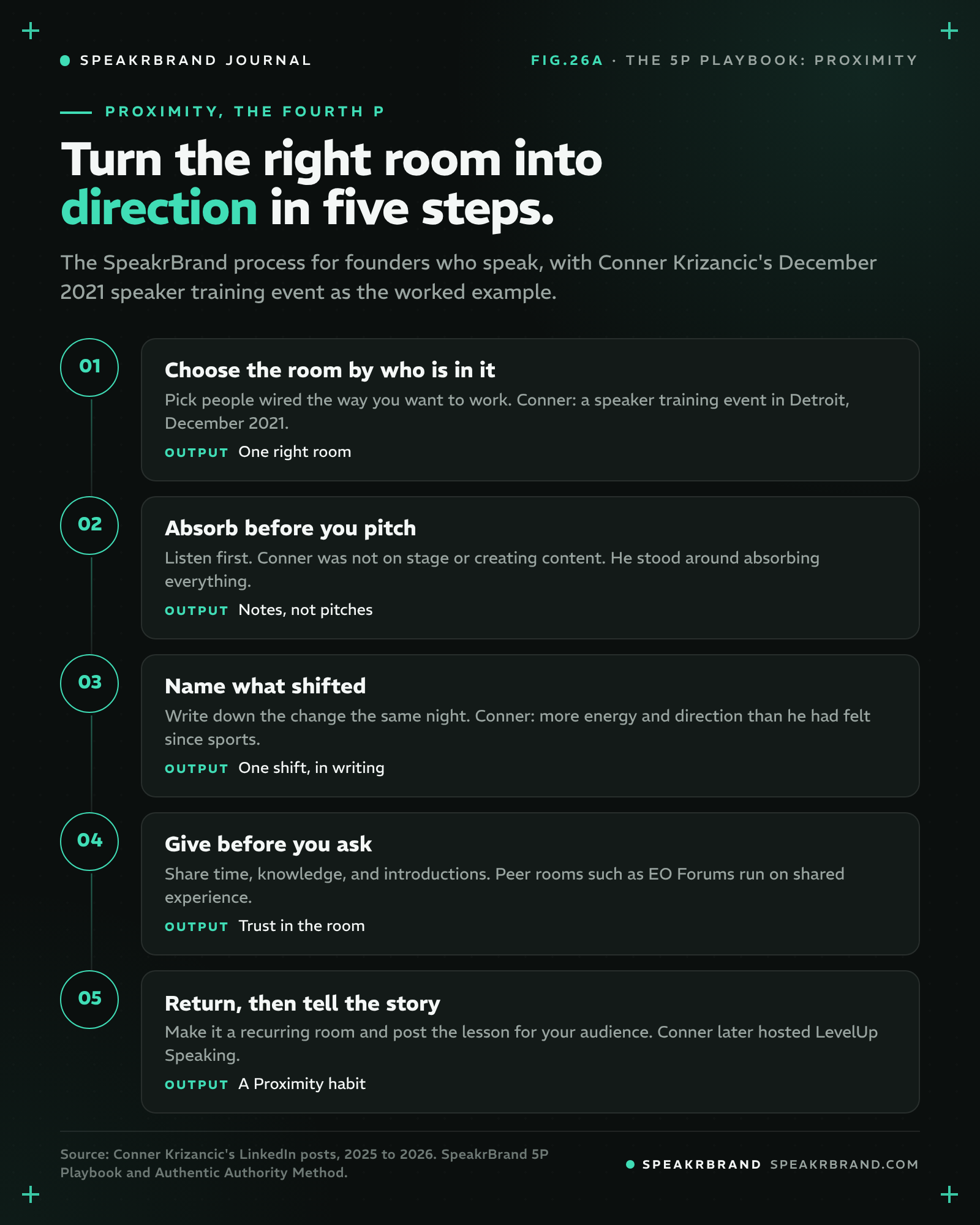
FIG.26A · Turn the right room into direction in five steps. Tap to open full size.
Founders can find rooms that change their direction by choosing rooms for the people in them, listening before pitching, naming what shifted, giving before asking, and returning often enough to become part of the room. FIG.26A lays out those five steps with Conner's December 2021 event as the worked example.
Start with who is in the room. Conner chose a speaker training event because the people there were building the kind of impact he wanted to support. Buffer, a fully remote company, makes the same bet on purpose: Hailley Griffis wrote that Buffer budgets for in-person retreats every year, where teammates share their personal stories over lunch, because "there's just something about meeting in person that you can't replace with video chats."
The last step is where Authentic Authority comes in. A room becomes a story post when the founder shares the shift and one lesson for the audience, which is the Stories bucket in SpeakrBrand's Authentic Authority method. If you need prompts, the list of top 20 content ideas for business leaders in 2027 includes event and turning-point angles.
Returning matters too. Conner went from attendee in 2021 to host in 2025, when SpeakrBrand ran its first LevelUp Speaking event and attendees began organizing monthly group calls to keep supporting each other.
Try this first
Write down the three rooms that changed your direction the most, with the year for each. Next to each one, write who was in the room and what you did differently in the 90 days after. Then look at your calendar for the next quarter and ask one question: which of these rooms am I in again, and which new room is on the list?
What Do Founders Get Wrong When They Walk Into a Room?
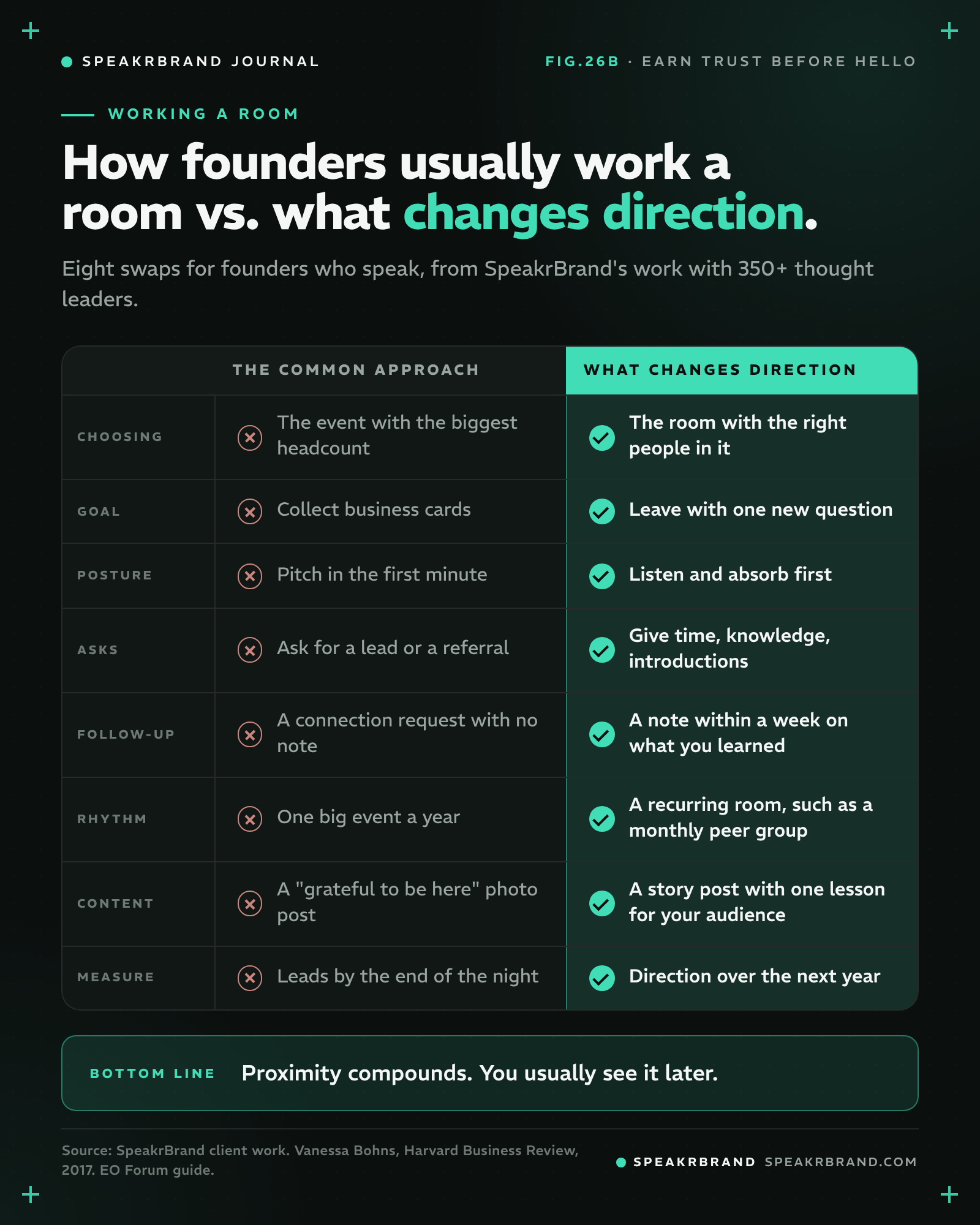
FIG.26B · How founders usually work a room vs. what changes direction. Tap to open full size.
Founders who walk into a room often treat it as a lead source for the night, when the room pays off over months through relationships, questions, and a story they can tell. The pitch in the first minute and the "grateful to be here" photo post are the two habits that cost the most.
FIG.26B lists eight swaps from SpeakrBrand's work with 350+ thought leaders. The three that matter most: choose rooms for the people in them instead of the headcount, leave with one new question instead of a stack of business cards, and measure the room by your direction over the next year instead of leads by the end of the night.
Frequently Asked Questions
Why do some rooms change a founder's direction?
Some rooms change a founder's direction because the people in them reset what feels normal and possible. A room of people building something bigger than themselves gives a founder new questions, honest feedback, and a working model of the next step.
What is Proximity in the 5P Playbook?
Proximity is the fourth P in SpeakrBrand's 5P Playbook and covers the Power Circle: warm network, masterminds, speaker organizations, bureau relationships, and peer collaboration. Proximity feeds Promotion, because warm relationships make outreach work.
How do founders choose the right events and peer groups?
Founders should choose events and peer groups by who is in the room, not by headcount or how famous the stage is. Look for people a few steps ahead, people wired for the same kind of impact, and a format that meets more than once.
How should founders follow up after an event?
Founders should follow up within a week with a short note on one thing they learned from the person, not a pitch. A connection request with a specific note keeps the relationship warm and turns a weak tie into a working one.
How can a founder turn an event into LinkedIn content?
A founder can turn an event into LinkedIn content by sharing the moment that shifted their thinking and one lesson for their audience. That story post belongs in the Stories bucket of the Authentic Authority method and earns more trust than an announcement post.
Some rooms change your trajectory, and you usually don't see it until later. Look back at the rooms that moved you, then put the next one on your calendar. If you want help building the brand that gets you invited into better rooms, start with SpeakrBrand's Speaker Brand Builder or explore our speaker branding services.
Some rooms change a founder's direction because the people in them reset what the founder believes is normal, possible, and worth doing. Conner Krizancic, founder and CEO of SpeakrBrand, walked into his first speaker training event in December 2021 "a bit lost," with "some direction, no real plan," and walked out with more energy and direction than he had felt in years. Five years later, that room still shapes the work SpeakrBrand does.
This is a short weekend story about that room and the rooms that followed. It is also a practical look at Proximity, the fourth P in SpeakrBrand's 5P Playbook (Positioning, Presence, Proof, Proximity, Promotion), and how founders who speak can choose and use the rooms that move them forward.
TLDR
- In December 2021, Conner Krizancic attended his first speaker training event in Detroit and left with a direction he had not felt since playing sports.
- The room mattered because of who was in it: people wired to make an impact on their communities and industries.
- Research backs the pattern. Half of CEOs report loneliness in the role, and peers and weak ties shape decisions, ideas, and opportunities.
- In the 5P Playbook, Proximity is the Power Circle: warm network, masterminds, speaker organizations, bureau relationships, and peer collaboration.
- Use the five steps in FIG.26A to choose a room, absorb it, give to it, return to it, and turn it into a story that earns trust before hello.
What Happened in the Room That Changed Conner Krizancic's Direction?
Conner Krizancic attended his first speaker training event in Detroit in December 2021, hosted by ImpactEleven, which was then called 3 Ring Circus, and the people in that room gave him a direction he had been missing. He was not on stage. He was not creating content. He was, in his words, "standing around absorbing everything."
What shifted was the company. "Everyone there was wired the same way," Conner wrote on LinkedIn. "They wanted to make an impact, and they were fired up about it." They were trying to change their communities and their industries and do something bigger than themselves. Conner had not felt that since he played sports, a part of his life that ended with a career-ending injury, a story told in why a career-ending concussion led to a life in speaker branding.
That first night, he remembers pacing around his hotel room "like the Energizer bunny, filled with ideas." He has written about the same event in a LinkedIn reflection on SpeakrBrand's first in-person event, describing how he "walked out of that event with energy and drive that felt almost unreal."
"Some rooms change your trajectory. And you usually don't know it until later." Conner Krizancic, on LinkedIn
The work that followed still looks like that room. SpeakrBrand serves speakers, authors, founders, coaches, and executives: different industries and stages with the same underlying drive. Conner has said the part he is most grateful for is the people the business puts him around.
Why Do the Right Rooms Matter So Much for Founders?
The right rooms matter for founders because founders make high-stakes decisions with few true peers, and the people around them shape what they notice, what they attempt, and which ideas survive. A room full of people who are building something gives a founder honest feedback, new questions, and a working model of what is possible.
Isolation is the default without those rooms. In Harvard Business Review, Thomas J. Saporito reported in 2012 that half of CEOs experience loneliness in their role, and 61% of that group believe it hinders their performance. Conner said the same thing in plain language when he moved to Dallas and joined EO Dallas: "Entrepreneurship can be a lonely, misunderstood road."
"Being in rooms with like-minded people who are generous, curious, and genuinely want to help each other grow? You can't beat that." Conner Krizancic, on joining EO Dallas
Peer rooms also improve judgment. Josh Lerner and Ulrike Malmendier studied Harvard Business School students who were assigned to class sections, and found in their NBER paper on entrepreneurial peers that more classmates with startup experience led to fewer unsuccessful ventures, a result the authors read as peers helping each other judge the merits of business plans. The Entrepreneurs' Organization builds its EO Forum peer groups on the same idea: six to ten entrepreneurs who meet monthly to share real experiences, not advice.
The people a founder meets once can matter as much as the people a founder sees every week. A five-year set of experiments on LinkedIn with about 20 million users, reported by MIT News in 2022, found that weaker ties led to more job mobility than strong ties, across 600,000 new jobs. The researchers explained in Harvard Business Review that arm's-length acquaintances were more helpful for new opportunities than close friends and coworkers. Rooms are where a founder collects those acquaintances.
The long view points the same way. The Harvard Study of Adult Development, summarized by the Harvard Gazette in 2017, found that people who were most satisfied in their relationships at age 50 were the healthiest at age 80.
Where Does Proximity Fit in the 5P Playbook?
Proximity is the fourth P in SpeakrBrand's 5P Playbook, and it covers the Power Circle: the warm network, masterminds, speaker organizations, bureau relationships, and peer collaboration around a speaker or founder. Proximity is often the P that quietly feeds the other four.
The 5P Playbook works as a diagnostic, a cycle rather than a one-time sequence. Positioning is the promise you are known for. Presence is where you show up. Proof is the credibility layer. Proximity is who you are around. Promotion is active outreach, warm network first. A founder with clear Positioning and strong Proof can still stall when the Power Circle is thin, because the warm introductions that make Promotion work never arrive. The reverse also happens: a founder meets the right people and sends them to a brand that is not ready. SpeakrBrand's Speaker Brand Builder program builds the messaging, brand identity, website, and sales assets so the introductions a room creates land on a brand that is ready to be booked.
Conner's own path shows how one room feeds another. The table below maps four rooms from his public posts to the P each one fed most.
| Type of room | Conner's example | What it changed | 5P it fed most |
|---|---|---|---|
| A learning room | A speaker training event in Detroit (ImpactEleven, then called 3 Ring Circus), December 2021 | Energy and direction, and a clear picture of the people he wanted to serve | Positioning |
| A room you host | The first LevelUp Speaking, powered by SpeakrBrand, December 2025 | Moved from attendee to host; attendees set up monthly calls to keep supporting each other | Promotion |
| A peer room | EO Dallas, after the move to Dallas in January 2026 | Relationships with Dallas founders and a renewed sense of energy and clarity | Proximity |
| A recognition room | A few days with fellow Inc. 5000 honorees, 2026 | The ranking landed through the people in the room, more than the number on the page | Proof |
Source: Conner Krizancic's LinkedIn posts, 2025 to 2026. On a phone, swipe the table sideways to see every column.
The recognition room is worth a note. After SpeakrBrand ranked #783 on the 2026 Inc. 5000, Conner wrote that "the number on a page never really landed" for him, and that being in a room for a few days with the leaders who earned their spot on the same list did. Proof carries more weight when it comes with people attached.
In-person time also carries weight that a message cannot. In a study summarized in Harvard Business Review in 2017, Vanessa Bohns found that a face-to-face request was 34 times more successful than an email. For a founder who speaks, the room is where the warm network starts.
How Can Founders Find and Use Rooms That Change Their Direction?
FIG.26A · Turn the right room into direction in five steps. Tap to open full size.
Founders can find rooms that change their direction by choosing rooms for the people in them, listening before pitching, naming what shifted, giving before asking, and returning often enough to become part of the room. FIG.26A lays out those five steps with Conner's December 2021 event as the worked example.
Start with who is in the room. Conner chose a speaker training event because the people there were building the kind of impact he wanted to support. Buffer, a fully remote company, makes the same bet on purpose: Hailley Griffis wrote that Buffer budgets for in-person retreats every year, where teammates share their personal stories over lunch, because "there's just something about meeting in person that you can't replace with video chats."
The last step is where Authentic Authority comes in. A room becomes a story post when the founder shares the shift and one lesson for the audience, which is the Stories bucket in SpeakrBrand's Authentic Authority method. If you need prompts, the list of top 20 content ideas for business leaders in 2027 includes event and turning-point angles.
Returning matters too. Conner went from attendee in 2021 to host in 2025, when SpeakrBrand ran its first LevelUp Speaking event and attendees began organizing monthly group calls to keep supporting each other.
Try this first
Write down the three rooms that changed your direction the most, with the year for each. Next to each one, write who was in the room and what you did differently in the 90 days after. Then look at your calendar for the next quarter and ask one question: which of these rooms am I in again, and which new room is on the list?
What Do Founders Get Wrong When They Walk Into a Room?
FIG.26B · How founders usually work a room vs. what changes direction. Tap to open full size.
Founders who walk into a room often treat it as a lead source for the night, when the room pays off over months through relationships, questions, and a story they can tell. The pitch in the first minute and the "grateful to be here" photo post are the two habits that cost the most.
FIG.26B lists eight swaps from SpeakrBrand's work with 350+ thought leaders. The three that matter most: choose rooms for the people in them instead of the headcount, leave with one new question instead of a stack of business cards, and measure the room by your direction over the next year instead of leads by the end of the night.
Frequently Asked Questions
Why do some rooms change a founder's direction?
Some rooms change a founder's direction because the people in them reset what feels normal and possible. A room of people building something bigger than themselves gives a founder new questions, honest feedback, and a working model of the next step.
What is Proximity in the 5P Playbook?
Proximity is the fourth P in SpeakrBrand's 5P Playbook and covers the Power Circle: warm network, masterminds, speaker organizations, bureau relationships, and peer collaboration. Proximity feeds Promotion, because warm relationships make outreach work.
How do founders choose the right events and peer groups?
Founders should choose events and peer groups by who is in the room, not by headcount or how famous the stage is. Look for people a few steps ahead, people wired for the same kind of impact, and a format that meets more than once.
How should founders follow up after an event?
Founders should follow up within a week with a short note on one thing they learned from the person, not a pitch. A connection request with a specific note keeps the relationship warm and turns a weak tie into a working one.
How can a founder turn an event into LinkedIn content?
A founder can turn an event into LinkedIn content by sharing the moment that shifted their thinking and one lesson for their audience. That story post belongs in the Stories bucket of the Authentic Authority method and earns more trust than an announcement post.
Some rooms change your trajectory, and you usually don't see it until later. Look back at the rooms that moved you, then put the next one on your calendar. If you want help building the brand that gets you invited into better rooms, start with SpeakrBrand's Speaker Brand Builder or explore our speaker branding services.