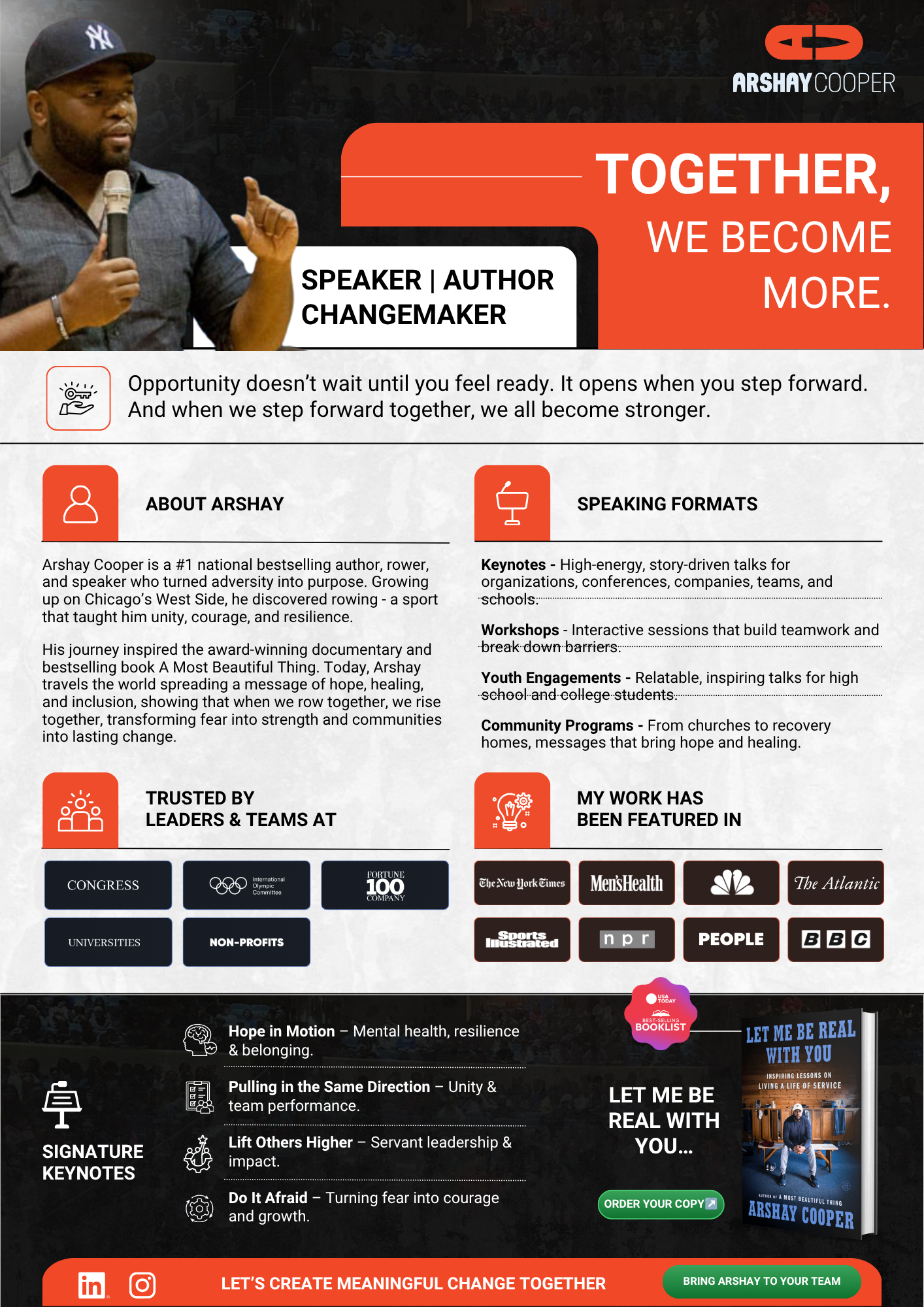
A speaker one-sheet should include six things: an outcome-driven headline, a clear statement of who you serve, two to three signature talks with takeaways, fast proof, a stage reel, and one obvious next step. Everything past that list is clutter that slows a meeting planner's decision. The one-sheet that gets booked is the one that helps a buyer reach yes faster than the competition.
Most speaker one-sheets fail for the opposite reason. They try to be a complete career record, packing in every talk, every accolade, and every idea the speaker has ever had. A planner scanning that page does not feel informed. They feel stalled. And a stalled planner moves on to the next option.
TLDR
- A one-sheet is a decision tool for event planners, not a resume. Every element should move the booking forward.
- Planners judge it in seconds, so the headline must promise an outcome and the audience match must be obvious immediately.
- List two to three signature talks with clear takeaways. A wall of ten topics reads as unfocused.
- Proof closes the gap: recognizable logos, one sharp named testimonial, a credential that earns instant trust, and a reel.
- End with one obvious next step so booking feels effortless.
What Is the Real Job of a Speaker One-Sheet?
The real job of a one-sheet is to help an event planner decide, quickly and confidently, that you are the right choice for their stage. It is a decision tool, and the speed of that decision is brutal. Research published in Behaviour and Information Technology shows people form an opinion about a page in roughly 50 milliseconds, and Princeton work on first impressions found that viewers lock in trait judgments like competence and trustworthiness after about a 100-millisecond exposure, with more time only hardening the verdict.
That speed is why clarity beats completeness. A Harvard Business Review study of thousands of buyers found the single biggest driver of purchase follow-through was decision simplicity, the ease of taking in and acting on information. A dense one-sheet works against that instinct. A focused one rewards it.
A one-sheet earns its keep as a decision tool. Every element either helps a planner say yes, or it is clutter. If something on the page does not move the booking forward, cut it.
What Should the Headline and Positioning Say?
The headline should promise an outcome, and the line beneath it should name exactly who you serve. A planner reads the top of the page to answer one question: is this person right for my audience? Give them the answer before they have to work for it.
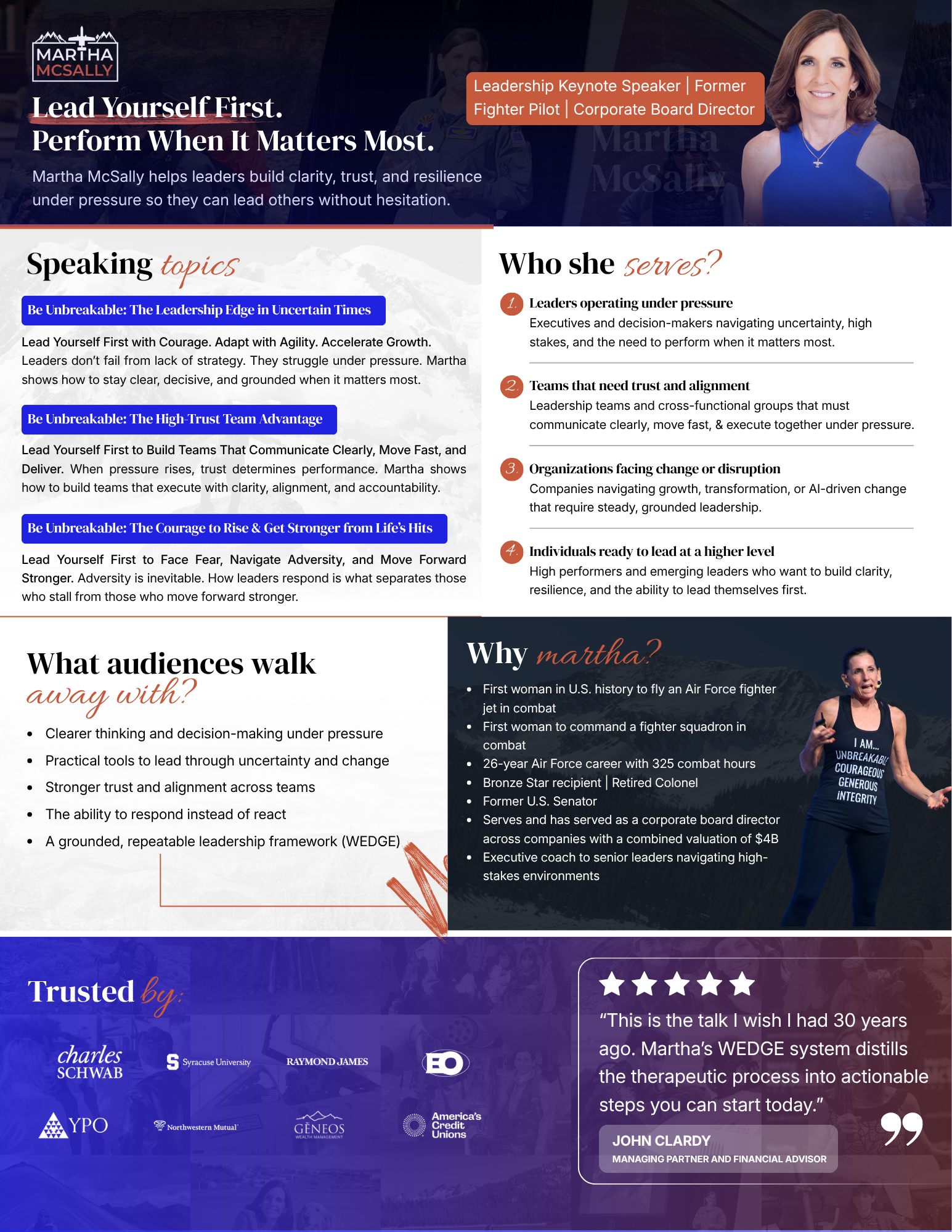
An outcome headline like "Lead Yourself First. Perform When It Matters Most." tells a planner what changes for their audience. A vague label like "Inspirational Speaker" tells them nothing and forces them to keep digging. The stakes are high because the Nielsen Norman Group finds users decide whether to stay based on whether they grasp your value in about ten seconds, and the Stanford Web Credibility Project found nearly half of people, 46.1 percent, judge credibility partly on visual presentation.
The "who you serve" line does the matching work. It should name the specific rooms you are built for, such as leaders operating under pressure or teams navigating disruption, so the planner can slot you against their event in one glance.
.png)
How Many Speaking Topics Should You List?
List two to three signature talks, each with a one-line takeaway, and stop there. More choices do not help a planner. They stall the decision. The well-known Iyengar and Lepper "jam study" found that shoppers shown 24 options were far less likely to buy than those shown 6, with purchases dropping from about 30 percent to 3 percent. A wall of ten topics produces the same paralysis, and it sends a quieter signal: a speaker who talks about everything looks unbooked.
.png)
Each talk needs a title and a single sentence on what the audience walks away with. The takeaway is what a planner repeats to their boss when they pitch you internally. Give them language that sells the booking for you.
Three sharp topics beat ten vague ones. The goal is not to prove range. It is to make one talk feel like the obvious fit for the planner's room.
What Kind of Proof Actually Gets You Booked?
The proof that gets you booked is concrete and fast: recognizable logos, one specific testimonial with a real name and title, a credential that earns instant trust, and a stage reel. Proof is what moves a planner from "interesting" to "safe to book," and safety is what they are actually buying when they hand you their audience.
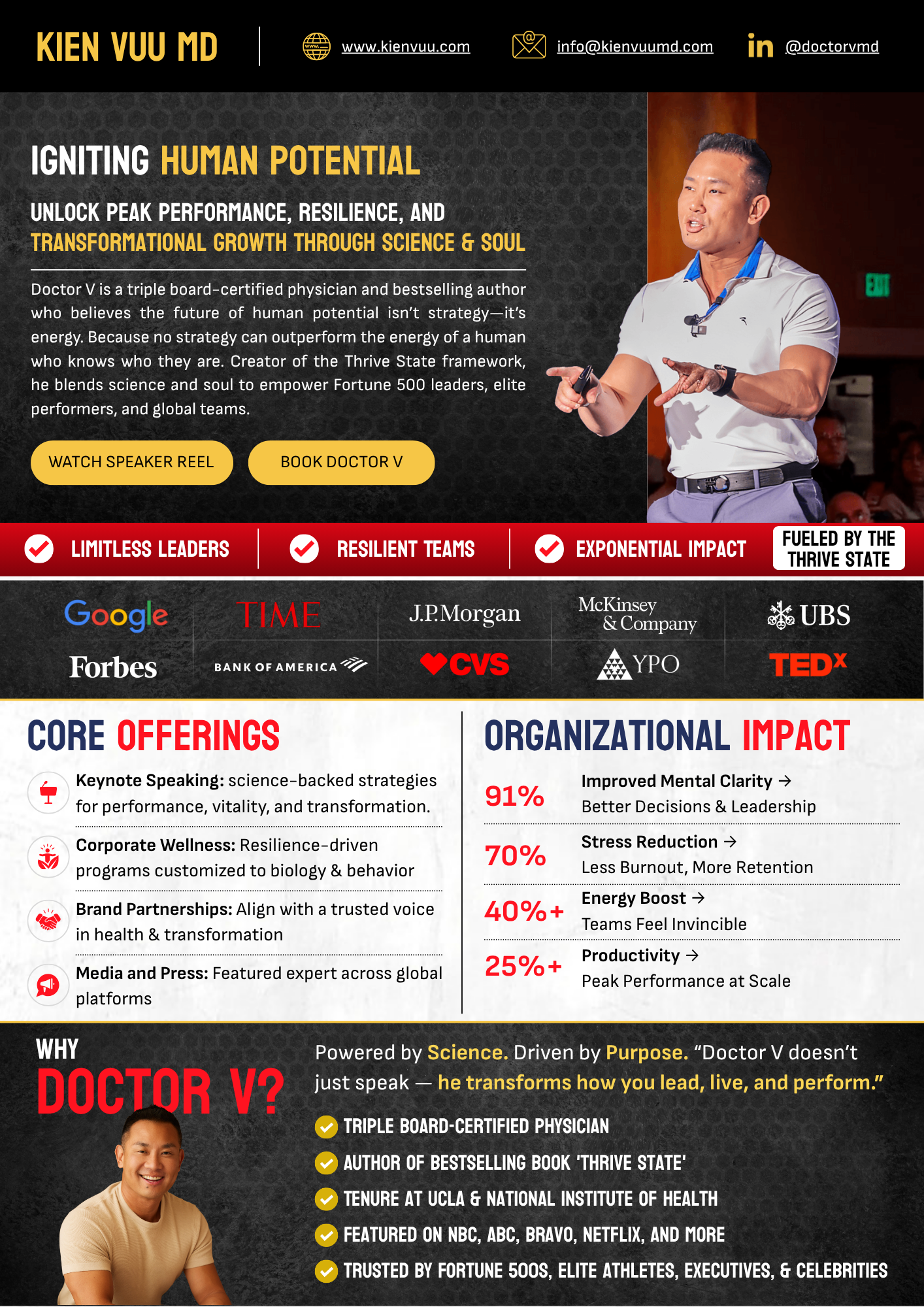
Credentials do heavy lifting because buyers trust evidence over adjectives. Edelman and LinkedIn's B2B research found 75 percent of decision-makers said a strong piece of thought leadership prompted them to research a provider they had not considered, and Forrester's buyer research consistently shows that peer and customer voices are among the most influential assets in a purchase decision. A credential like "former fighter pilot" or "triple board-certified physician" compresses years of trust into a single line.
The reel matters just as much. A planner wants to see you command a room before they ever send an email, and a short clip carries what the Nielsen Norman Group calls the aesthetic-usability effect, where polished presentation makes the underlying substance feel stronger too.
.png)
What Should Happen After Someone Finishes Your One-Sheet?
After a planner finishes your one-sheet, there should be exactly one obvious next step. A single clear call to action, a booking email, or a button that says "Bring [name] to your team." Once interest is high, any friction in the path to contact can undo everything the page earned.
One decisive action beats a scatter of links. The same decision-simplicity research that explains why clarity wins at the top of the page applies at the bottom: the easier you make the next move, the more planners take it. The best one-sheets feel inevitable. A planner finishes the page already knowing the answer.
Frequently Asked Questions
How long should a speaker one-sheet be?
One page. The format exists to force focus, and a planner should be able to scan the whole thing in under a minute. If the content spills past a page, the fix is cutting, not adding pages.
What is the difference between a one-sheet and a speaker bio?
A bio tells your story, while a one-sheet sells a booking. The bio is about you, and the one-sheet is about what the planner's audience gains. Keep the life narrative for the stage and make the one-sheet a decision tool.
How many speaking topics should a one-sheet include?
Two to three, each with a clear takeaway. Listing too many topics creates choice overload and signals a lack of focus. A curated set of talks reads as a specialist, which is what planners book.
Do I need a speaker reel on my one-sheet?
Yes, if you have stage footage. A reel lets a planner see your presence instead of imagining it, which is the single fastest way to build confidence. Even a tight thirty to sixty second clip outperforms paragraphs of description.
What makes a speaker headline effective?
An effective headline promises a specific outcome for the audience rather than describing the speaker. "Perform When It Matters Most" works because it names a result. "Inspirational Speaker" fails because it could apply to anyone.
The Bottom Line
A speaker one-sheet is a decision engine, not a highlight reel of your career. Lead with an outcome headline, name who you serve, list a few sharp talks, prove you are safe to book, show the reel, and point to one clear next step. Strip everything that does not move a planner toward yes, and the page starts working as hard as you do.
If you want your one-sheet built to this standard, join the SpeakrBrand webinar Market-Ready Speaker Assets, where we break down the exact assets that get speakers booked and the ones quietly holding them back.
A speaker one-sheet should include six things: an outcome-driven headline, a clear statement of who you serve, two to three signature talks with takeaways, fast proof, a stage reel, and one obvious next step. Everything past that list is clutter that slows a meeting planner's decision. The one-sheet that gets booked is the one that helps a buyer reach yes faster than the competition.
Most speaker one-sheets fail for the opposite reason. They try to be a complete career record, packing in every talk, every accolade, and every idea the speaker has ever had. A planner scanning that page does not feel informed. They feel stalled. And a stalled planner moves on to the next option.
TLDR
- A one-sheet is a decision tool for event planners, not a resume. Every element should move the booking forward.
- Planners judge it in seconds, so the headline must promise an outcome and the audience match must be obvious immediately.
- List two to three signature talks with clear takeaways. A wall of ten topics reads as unfocused.
- Proof closes the gap: recognizable logos, one sharp named testimonial, a credential that earns instant trust, and a reel.
- End with one obvious next step so booking feels effortless.
What Is the Real Job of a Speaker One-Sheet?
The real job of a one-sheet is to help an event planner decide, quickly and confidently, that you are the right choice for their stage. It is a decision tool, and the speed of that decision is brutal. Research published in Behaviour and Information Technology shows people form an opinion about a page in roughly 50 milliseconds, and Princeton work on first impressions found that viewers lock in trait judgments like competence and trustworthiness after about a 100-millisecond exposure, with more time only hardening the verdict.
That speed is why clarity beats completeness. A Harvard Business Review study of thousands of buyers found the single biggest driver of purchase follow-through was decision simplicity, the ease of taking in and acting on information. A dense one-sheet works against that instinct. A focused one rewards it.
A one-sheet earns its keep as a decision tool. Every element either helps a planner say yes, or it is clutter. If something on the page does not move the booking forward, cut it.
What Should the Headline and Positioning Say?
The headline should promise an outcome, and the line beneath it should name exactly who you serve. A planner reads the top of the page to answer one question: is this person right for my audience? Give them the answer before they have to work for it.
An outcome headline like "Lead Yourself First. Perform When It Matters Most." tells a planner what changes for their audience. A vague label like "Inspirational Speaker" tells them nothing and forces them to keep digging. The stakes are high because the Nielsen Norman Group finds users decide whether to stay based on whether they grasp your value in about ten seconds, and the Stanford Web Credibility Project found nearly half of people, 46.1 percent, judge credibility partly on visual presentation.
The "who you serve" line does the matching work. It should name the specific rooms you are built for, such as leaders operating under pressure or teams navigating disruption, so the planner can slot you against their event in one glance.
How Many Speaking Topics Should You List?
List two to three signature talks, each with a one-line takeaway, and stop there. More choices do not help a planner. They stall the decision. The well-known Iyengar and Lepper "jam study" found that shoppers shown 24 options were far less likely to buy than those shown 6, with purchases dropping from about 30 percent to 3 percent. A wall of ten topics produces the same paralysis, and it sends a quieter signal: a speaker who talks about everything looks unbooked.
Each talk needs a title and a single sentence on what the audience walks away with. The takeaway is what a planner repeats to their boss when they pitch you internally. Give them language that sells the booking for you.
Three sharp topics beat ten vague ones. The goal is not to prove range. It is to make one talk feel like the obvious fit for the planner's room.
What Kind of Proof Actually Gets You Booked?
The proof that gets you booked is concrete and fast: recognizable logos, one specific testimonial with a real name and title, a credential that earns instant trust, and a stage reel. Proof is what moves a planner from "interesting" to "safe to book," and safety is what they are actually buying when they hand you their audience.
Credentials do heavy lifting because buyers trust evidence over adjectives. Edelman and LinkedIn's B2B research found 75 percent of decision-makers said a strong piece of thought leadership prompted them to research a provider they had not considered, and Forrester's buyer research consistently shows that peer and customer voices are among the most influential assets in a purchase decision. A credential like "former fighter pilot" or "triple board-certified physician" compresses years of trust into a single line.
The reel matters just as much. A planner wants to see you command a room before they ever send an email, and a short clip carries what the Nielsen Norman Group calls the aesthetic-usability effect, where polished presentation makes the underlying substance feel stronger too.
What Should Happen After Someone Finishes Your One-Sheet?
After a planner finishes your one-sheet, there should be exactly one obvious next step. A single clear call to action, a booking email, or a button that says "Bring [name] to your team." Once interest is high, any friction in the path to contact can undo everything the page earned.
One decisive action beats a scatter of links. The same decision-simplicity research that explains why clarity wins at the top of the page applies at the bottom: the easier you make the next move, the more planners take it. The best one-sheets feel inevitable. A planner finishes the page already knowing the answer.
Frequently Asked Questions
How long should a speaker one-sheet be?
One page. The format exists to force focus, and a planner should be able to scan the whole thing in under a minute. If the content spills past a page, the fix is cutting, not adding pages.
What is the difference between a one-sheet and a speaker bio?
A bio tells your story, while a one-sheet sells a booking. The bio is about you, and the one-sheet is about what the planner's audience gains. Keep the life narrative for the stage and make the one-sheet a decision tool.
How many speaking topics should a one-sheet include?
Two to three, each with a clear takeaway. Listing too many topics creates choice overload and signals a lack of focus. A curated set of talks reads as a specialist, which is what planners book.
Do I need a speaker reel on my one-sheet?
Yes, if you have stage footage. A reel lets a planner see your presence instead of imagining it, which is the single fastest way to build confidence. Even a tight thirty to sixty second clip outperforms paragraphs of description.
What makes a speaker headline effective?
An effective headline promises a specific outcome for the audience rather than describing the speaker. "Perform When It Matters Most" works because it names a result. "Inspirational Speaker" fails because it could apply to anyone.
The Bottom Line
A speaker one-sheet is a decision engine, not a highlight reel of your career. Lead with an outcome headline, name who you serve, list a few sharp talks, prove you are safe to book, show the reel, and point to one clear next step. Strip everything that does not move a planner toward yes, and the page starts working as hard as you do.
If you want your one-sheet built to this standard, join the SpeakrBrand webinar Market-Ready Speaker Assets, where we break down the exact assets that get speakers booked and the ones quietly holding them back.