The speaking industry is not slowing down, but it is getting more competitive. More speakers are entering the market, planners have more choices, and attention is harder to earn.
In 2026, talent alone will not separate booked speakers from overlooked ones. Readiness will.
The speakers who get booked consistently are not guessing, waiting, or polishing endlessly. They have clarity, assets, and systems in place before opportunities appear.
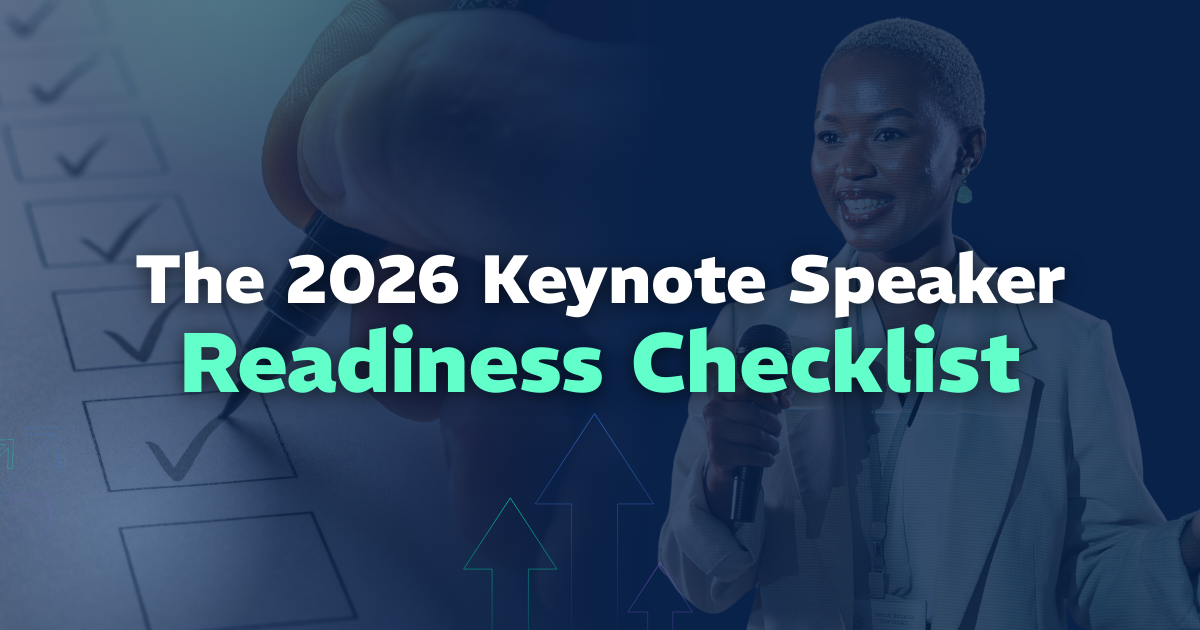
Use the checklist below to pressure-test whether you are truly ready for 2026.
1. You Are Clear On Exactly Who You Speak To And Who You Do Not
If your audience is unclear, bookings stall.
Planners need to immediately recognize whether you are right for their event. If they have to interpret your message, they will move on.
Tactically, this means you can clearly answer:
- Who your primary audience is
- What role or level they are at
- What specific problem your keynote addresses
- What transformation and takeaways the audience will leave with
Equally important, you can state who you are not for. Clear positioning makes referrals easier and decisions faster.
2. You Can Explain Your Value In One Plain Sentence
If your value proposition relies on buzzwords, it is not ready.
In 2026, speakers must be able to describe what they do in language a non-speaker understands. This is especially important in emails, introductions, and referral conversations.
A practical test:
- Write one sentence that explains the outcome of your keynote
- Remove adjectives like “inspiring” or “transformational”
- Focus on what changes for the audience after your talk
If that sentence feels vague, refine it until it is concrete.
3. Your Stories Clearly Support Your Core Message
Stories should serve the message, not steal the spotlight.
Strong speakers know exactly why each story exists and what it reinforces. Every story should connect directly to a takeaway the audience needs.
Tactically, review your keynote and ask:
- What point does this story support
- What would be lost if this story were removed
- Is the takeaway explicit or implied
If the story is memorable but the message is not, it needs work.
4. You Have A Simple Marketing Strategy That Keeps You Top Of Mind
Being good is not enough if no one remembers you.
Booked speakers in 2026 are not relying on sporadic posting or bursts of activity. They have a repeatable visibility plan.
This does not require being everywhere. It requires consistency in the right places.
At a minimum, your strategy should include:
- One primary platform where you show up consistently
- A way to share insights or stage moments regularly
- A clear connection between your content and your speaking message
Marketing is not about volume. It is about recall.
5. You Have Sales-Fueling Assets That Match Your Current Level
Outdated or incomplete assets quietly kill bookings.
Planners make decisions quickly. Your materials must reflect how you show up now, not who you were two years ago.
At minimum, you should have:
- A professional website with clear messaging
- Updated professional photos that show presence and confidence
- Video clips or a reel that demonstrate delivery, not just ideas
If you are proud of your talk but hesitant to share your assets, that is a signal they need attention.
6. You Understand How Bookings Actually Happen
Many speakers focus on content without understanding the buying process.
In reality, bookings are driven by ease, trust, and timing as much as talent.
Speakers ready for 2026 understand:
- Who makes the final decision
- How bureaus and planners evaluate speakers
- What reduces risk for the buyer
When you understand the process, you stop guessing and start positioning intentionally.
7. You Are Doing Outbound Consistently, Not Occasionally
Waiting is not a strategy.
The speakers who build momentum do not rely solely on inbound interest. They stay in touch, follow up, and let their network know what they are doing.
Consistent outbound does not mean cold pitching. It means relationship-driven outreach.
Practically, this includes:
- Reaching out to past colleagues, clients, and partners
- Letting your network know who you speak to and what you offer
- Following up without assuming people will remember
Momentum is built through action, not visibility alone.
The Bottom Line
2026 will reward speakers who are prepared, positioned, and proactive.
This checklist is not about perfection. It is about eliminating friction between you and a booking decision.
If you can confidently check off each item, you are not just hoping to get booked next year. You are building momentum on purpose.
And that is what separates speakers who wait from speakers who win.
The speaking industry is not slowing down, but it is getting more competitive. More speakers are entering the market, planners have more choices, and attention is harder to earn.
In 2026, talent alone will not separate booked speakers from overlooked ones. Readiness will.
The speakers who get booked consistently are not guessing, waiting, or polishing endlessly. They have clarity, assets, and systems in place before opportunities appear.
Use the checklist below to pressure-test whether you are truly ready for 2026.
1. You Are Clear On Exactly Who You Speak To And Who You Do Not
If your audience is unclear, bookings stall.
Planners need to immediately recognize whether you are right for their event. If they have to interpret your message, they will move on.
Tactically, this means you can clearly answer:
- Who your primary audience is
- What role or level they are at
- What specific problem your keynote addresses
- What transformation and takeaways the audience will leave with
Equally important, you can state who you are not for. Clear positioning makes referrals easier and decisions faster.
2. You Can Explain Your Value In One Plain Sentence
If your value proposition relies on buzzwords, it is not ready.
In 2026, speakers must be able to describe what they do in language a non-speaker understands. This is especially important in emails, introductions, and referral conversations.
A practical test:
- Write one sentence that explains the outcome of your keynote
- Remove adjectives like “inspiring” or “transformational”
- Focus on what changes for the audience after your talk
If that sentence feels vague, refine it until it is concrete.
3. Your Stories Clearly Support Your Core Message
Stories should serve the message, not steal the spotlight.
Strong speakers know exactly why each story exists and what it reinforces. Every story should connect directly to a takeaway the audience needs.
Tactically, review your keynote and ask:
- What point does this story support
- What would be lost if this story were removed
- Is the takeaway explicit or implied
If the story is memorable but the message is not, it needs work.
4. You Have A Simple Marketing Strategy That Keeps You Top Of Mind
Being good is not enough if no one remembers you.
Booked speakers in 2026 are not relying on sporadic posting or bursts of activity. They have a repeatable visibility plan.
This does not require being everywhere. It requires consistency in the right places.
At a minimum, your strategy should include:
- One primary platform where you show up consistently
- A way to share insights or stage moments regularly
- A clear connection between your content and your speaking message
Marketing is not about volume. It is about recall.
5. You Have Sales-Fueling Assets That Match Your Current Level
Outdated or incomplete assets quietly kill bookings.
Planners make decisions quickly. Your materials must reflect how you show up now, not who you were two years ago.
At minimum, you should have:
- A professional website with clear messaging
- Updated professional photos that show presence and confidence
- Video clips or a reel that demonstrate delivery, not just ideas
If you are proud of your talk but hesitant to share your assets, that is a signal they need attention.
6. You Understand How Bookings Actually Happen
Many speakers focus on content without understanding the buying process.
In reality, bookings are driven by ease, trust, and timing as much as talent.
Speakers ready for 2026 understand:
- Who makes the final decision
- How bureaus and planners evaluate speakers
- What reduces risk for the buyer
When you understand the process, you stop guessing and start positioning intentionally.
7. You Are Doing Outbound Consistently, Not Occasionally
Waiting is not a strategy.
The speakers who build momentum do not rely solely on inbound interest. They stay in touch, follow up, and let their network know what they are doing.
Consistent outbound does not mean cold pitching. It means relationship-driven outreach.
Practically, this includes:
- Reaching out to past colleagues, clients, and partners
- Letting your network know who you speak to and what you offer
- Following up without assuming people will remember
Momentum is built through action, not visibility alone.
The Bottom Line
2026 will reward speakers who are prepared, positioned, and proactive.
This checklist is not about perfection. It is about eliminating friction between you and a booking decision.
If you can confidently check off each item, you are not just hoping to get booked next year. You are building momentum on purpose.
And that is what separates speakers who wait from speakers who win.